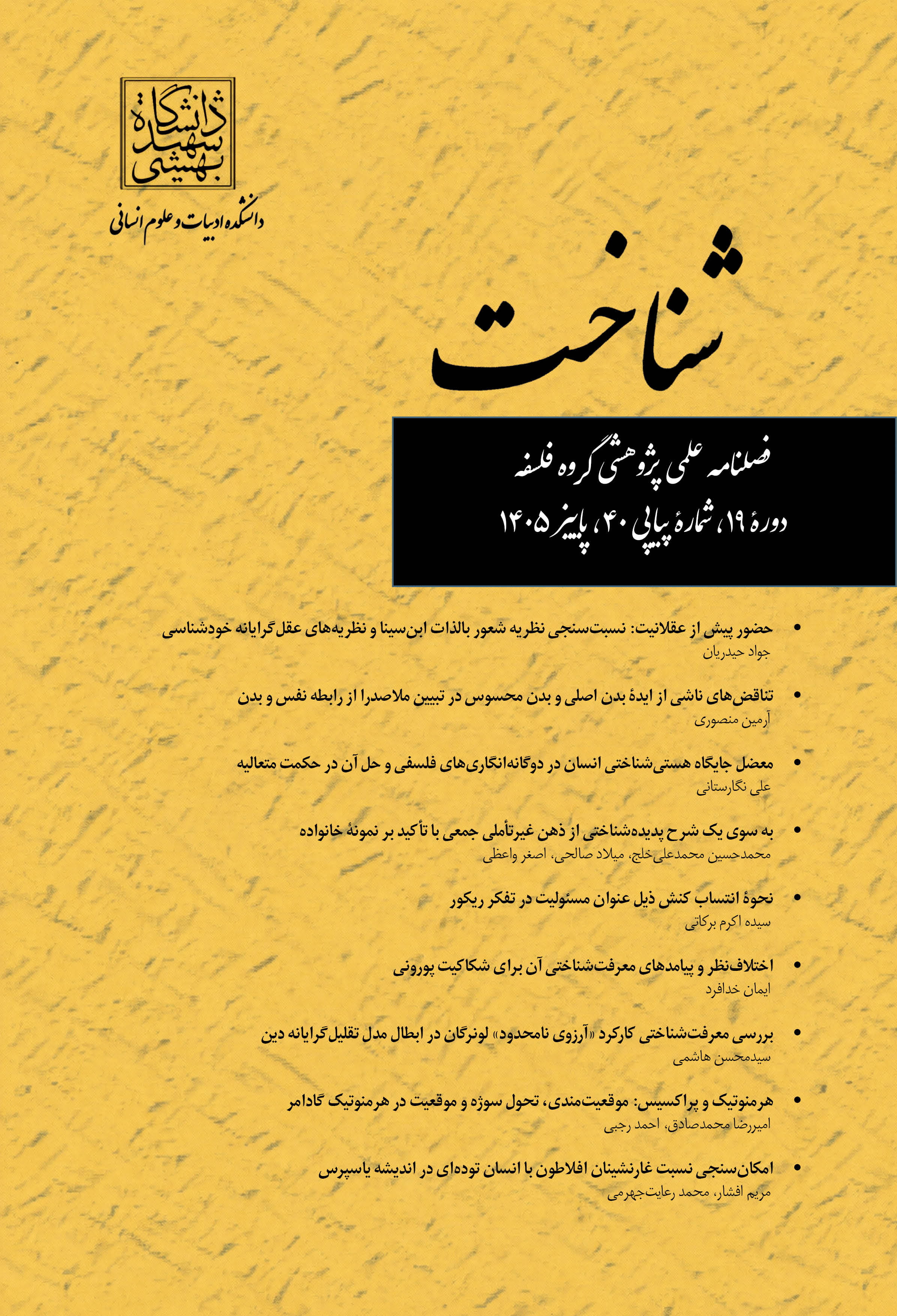
تناقض‌های ناشی از ایدة بدن اصلی و بدن محسوس در تبیین ملاصدرا از رابطة نفس و بدن

نوع مقاله : علمی - پژوهشی

نویسنده
استادیار، دانشگاه تبریز، تبریز، ایران
چکیده
رابطه نفس و بدن در فلسفه ملاصدرا، به دلیل اهمیت ذاتی فراوان خود و نیز مسیر خاص و ایده‌های بدیعی که ملاصدرا در تبیین آن ارائه کرده، مبحثی بحث برانگیز است. ملاصدرا با طرح ایده حدوث جسمانی از یک طرف و طرح بدن اصلی و بدن محسوس از طرف دیگر، عمده دیدگاه‌های خویش را در خصوص رابطه نفس و بدن تبیین نموده است. ایده بدن اصلی و بدن محسوس از ابداعات مهم ملاصدرا در خصوص نفس است. با این حال از کنار هم قرار دادن عبارت‌های ملاصدرا در فرازهای مختلف مرتبط با بدن اصلی و بدن محسوس و حدوث جسمانی، تناقض‌هایی به چشم می‌خورد. هدف این پژوهش این است که با روش توصیفی-تحلیلِ برهانی این تناقض‌ها را احصاء نموده و در گام بعدی به بررسی صحت یا عدم صحت آن‌ها بپردازد. یافته‌ها گویای آنند که این تناقض‌ها به صورت کلی به نقطه آغاز تکون نفس، پوشش دادن یا ندادن مراتب صورت‌های عنصری، معدنی و گیاهی توسط نفس، اتحاد نفس و بدن، تجسم و تجسد نفس و عینیت نفس با بدن محسوس و اندام‌های آن در مرتبة آن‌ها و تناسب و اتحاد جوهری میان نفس و بدن، مربوط می‌شوند.
کلیدواژه‌ها
موضوعات

عنوان مقاله English

Contradictions arising from the idea of the principal body and the sensible body in Mullā Sadrā's explanation of the relationship between soul and body

نویسنده English

Armin Mansouri
Assistant Professor, University of Tabriz
چکیده English

The relationship between soul and body in Mullā Sadrā's philosophy is a controversial topic due to its great importance, as well as the specific path and original ideas that Mullā Sadrā presented in explaining it. Mullā Sadrā, on the one hand, by proposing the idea of corporeal origination (hudūth jismānī), and on the other hand, by proposing the principal body and the sensible body, has explained the major part of his views regarding the relationship between soul and body. The idea of the principal body and the sensible body is one of Mullā Sadrā's important innovations concerning the soul. However, juxtaposing Mullā Sadrā's statements in various passages concerning the principal body, the sensible body, and corporeal origination, certain contradictions become apparent. The aim of this research is to employ a descriptive-analytical and argumentative method to identify these contradictions and, in the next step, to examine their validity or invalidity. The findings indicate that these contradictions are generally related to the starting point of the soul's origination, whether or not the soul encompasses the levels of elemental, mineral, and vegetable forms, the union of soul and body, the embodiment of the soul, the identity of the soul with the sensible body and its organs at their levels, and the substantial correspondence and union between soul and body.

کلیدواژه‌ها English

Main body
sensible body
Mulla Sadra
body
soul
Hasanzadeh Amoli, H. (2013). Courses in the cognituion of the Soul. Tehran: Scientific and Cultural Publications. [in Persian]
Mansouri, A. (2025). Evaluating two different interpretations of the physical temporality of the soul. Journal of Philosophical Theological Research, 27(4), 173-196. doi: 10.22091/jptr.2026.13361.3331
Mesbah Yezdi, M.T. (2014). Sharh al-Asfar al-Arba'a (Vol. 8, Part 1). Qom: Institute of Islamic Teachings and Research of Imam Khomeini. [in Persian]
Mesbah Yezdi, M.T. (2014). Sharh al-Asfar al-Arba'a (Vol. 8, Part 2). Qom: Institute of Islamic Teachings and Research of Imam Khomeini. [in Persian]
Mulla Sadra, M. (1987). Shawahid al-Rububiyyah (Translated by Javad Mosleh). Tehran: Islamic Republic of Iran Broadcasting Publications. [in Persian]
Mulla Sadra, M. (n.d). Taliqe bar Hekmat al-Eshraq. Lithography. [in Arabic]
Mulla Sadra, M. (1982). Arshiyyah. Tehran: Mowla. [in Arabic]
Mulla Sadra, M. (1981a). Shawahid al-Rububiyyah (M. H. Sabzavari, Ed.). Tehran: Center for Publishing of University. [in Arabic]
Mulla Sadra, M. (1981). Al-Hikma al-Muta'aliyah fi al-Asfar al-'Aqliyyah al-Arba'a (Vol. 3). Beirut: Dar Ihya' al-Turath al-Arabi. [in Arabic]
Mulla Sadra, M. (1981). Al-Hikma al-Muta'aliyah fi al-Asfar al-'Aqliyyah al-Arba'a (Vol. 8). Beirut: Dar Ihya' al-Turath al-Arabi. [in Arabic]
Mulla Sadra, M. (1981). Al-Hikma al-Muta'aliyah fi al-Asfar al-'Aqliyyah al-Arba'a (Vol. 9). Beirut: Dar Ihya' al-Turath al-Arabi. [in Arabic]
Mulla Sadra. (1884). Majmuah al-Rasa'il al-Tisah. Qom: Maktabat al-Mustafawi. [in Arabic]
Mulla Sadra, M. (1984). Mafatih al-Gheib. Tehran: Cultural Studies and Research Institute. [in Arabic]
Mulla Sadra, M. (1981b). Asrar al-Ayat va Anvar al-Bayyenat. Tehran: Islamic Society of Wisdom and Philosophy of Iran. [in Arabic]
Mulla Sadra, M. (1975). Al-Mabda' wa al-Ma'ad. Tehran: Anjoman-e Hikmat va Falsafe-ye Iran. [in Arabic]
Mulla Sadra, M. (1996). The Collection of Philosophical Letters of Sadr al-Muta'allihin. Tehran: Hekmat. [in Arabic]
Mousavi, H. (2016). The identity of the body from the perspective of Mullā Ṣadrā. Journal of Islamic Philosophical Doctrines, (19), 111-130.
Oboudiyat, A. (2016). An Introduction to the Mulla Sadra's theosophical system (Vol. 1). Tehran: Samt. [in Persian]
Yousefi, M.T. (2015). Philosophical Psychology (Lectures by Gholamreza Fayyazi). Tehran, Samt. [in Persian]

  • تاریخ دریافت 17 اردیبهشت 1405
  • تاریخ بازنگری 24 تیر 1405
  • تاریخ پذیرش 08 شهریور 1405